

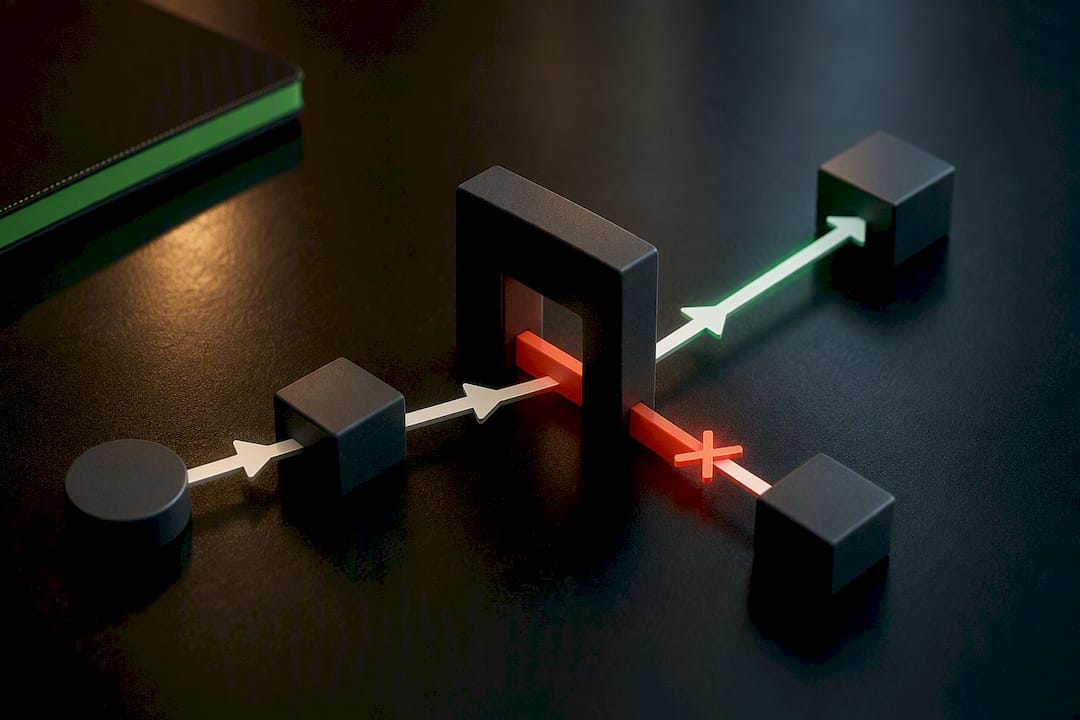
Run five checks before you touch a Pump.fun token: mint authority, freeze authority, metadata/update authority, liquidity lock status, and top-10 holder concentration. If any one of them comes back red, walk away, regardless of how the chart looks or how loud the Telegram group is. This coin vetting checklist exists because most rug pulls leave the same fingerprints on-chain, and those fingerprints are visible in under a minute if you know where to look.
TL;DR:
- Conduct comprehensive on-chain checks, including inactive mint and freeze authorities, and ensure no active update authority, to prevent unlimited token minting or metadata changes.
- Verify liquidity lock status and pool depth directly, as market cap figures can be misleading, especially when tokens are migrated from bonding curves to Pools with thin liquidity.
- Review deployer wallet history, holder clusters, and social activity to identify insider bundling and coordinated pump or dump schemes.
- Maintain strict risk controls such as fixed position sizes, predefined exit triggers, and detailed trade logging to mitigate potential losses during volatile launches.
- Recognize legal risks in unregulated meme tokens, especially those promising guaranteed returns or posing as securities, and treat them as high-risk undefined assets lacking formal protections.
Table of Contents
- Quick One-Click Vetting: Tools and Immediate Red Flags
- How Do You Verify On-Chain Flags by Hand?
- Why Pool Depth Matters More Than Market Cap
- Checks Scanners Miss: Dev History, Clusters, and Social Signals
- Pre-Trade Execution Checklist and Risk Controls
- Verification of Regulatory Compliance and Legal Risks
- Why I Enforce a Walk-on-Any-Red-Flag Rule
- How Snipethem Fits Into a Faster Vetting Workflow
- Sources
Quick One-Click Vetting: Tools and Immediate Red Flags
Before you open Solscan or run any manual check, run the token through a rug-check scanner. This is the fastest filter in any cryptocurrency evaluation guide, and it exists specifically because most rug vectors are mechanical, not mysterious. A scanner that aggregates the five structural checks will return a score, usually on a 0 to 100 scale, and a score of 85 or higher generally means the mechanical rug vectors are closed. That score is a floor check, not a prediction of where price goes next.
The workflow is simple enough to run between trades:
- Paste the mint address into a scanner like SolFoundry's rug check tool.
- Read the score and scan for any flagged authority.
- Confirm the liquidity lock badge shows green.
- Click through to holder distribution and check the top 10 wallets.
Certain outputs should stop you cold. These aren't judgment calls, they're disqualifiers:
- Mint authority still active (the deployer can print more tokens at will)
- Freeze authority still active (your wallet can be frozen mid-trade)
- No liquidity lock, or a very short lock duration
- Top 10 wallets holding a large share of supply outside the liquidity pool
- A scanner score under 50 with no clear explanation for the flags
None of this replaces judgment, but it replaces guesswork. A scanner score speeds up filtering, but the actual protection comes from treating any single red flag as a hard stop rather than something to weigh against a promising chart.
Pro Tip: Run the scanner before you open the chart, not after. If you look at price action first, you'll talk yourself into ignoring a red flag you would have caught cold.
How Do You Verify On-Chain Flags by Hand?
Scanners aggregate data, but they can lag or misread edge cases, so a full crypto asset vetting process includes checking the raw data yourself on Solscan and DexScreener. This takes maybe 90 seconds once you know the exact fields.
- On Solscan, open the token's page and check the Mint Authority field under token details. It should read "None" or show a burned address. Anything else means new supply can be minted on demand.
- Check Freeze Authority the same way. An active freeze authority means the deployer can lock your wallet's tokens.
- Check Update Authority under metadata. An active update authority lets the deployer rewrite the token's name, image, or metadata after launch, sometimes used to disguise a token post-rug.
- On DexScreener, find the lock badge on the pool page and check the duration. A lock period described in days or weeks means less than one measured in longer durations.
- In the holder list, cross-reference wallet addresses against the liquidity pool address to separate genuine holders from the LP wallet itself, since LP holdings can inflate apparent "concentration."
SolFoundry's five-check framework catches the mechanical vectors this way, and it's worth noting that clusters of wallets that fund each other in sequence, often visible as a chain of small transfers right after launch, are a strong tell for insider bundling rather than organic buying.
One special case: tokens built on the Token-2022 standard carry an Extensions tab with transfer hooks. An undisclosed transfer hook can block transfers or enforce hidden rules, so treat any unfamiliar hook as a red flag until you understand what it does.
Why Pool Depth Matters More Than Market Cap
Headline market cap on a fresh Pump.fun launch is often decorative. Fully diluted valuation can look impressive while the actual pool backing it is thin, which means a modest sell order can move price far more than the FDV number suggests. Checking pool TVL directly, rather than trusting the market cap figure a chart tool displays, tells you what the token can actually absorb.
Two things drive this risk on Pump.fun specifically:
- Bonding-curve migration. Tokens that haven't graduated to a full liquidity pool trade against a bonding curve, and the moment of migration to Raydium is when real liquidity gets created, often thin at first.
- Price impact scales with pool size, not market cap. A token showing a seven-figure valuation with a five-figure pool will punish any exit above a small size.
The practical rule: size your position to what the pool can absorb on the way out, not just the way in. If you can't find a clear pool TVL figure, treat that as a red flag on its own.
Checks Scanners Miss: Dev History, Clusters, and Social Signals
On-chain scanners tell you about the current contract. They don't tell you whether the person deploying it has done this before. A meaningful part of any coin selection criteria has to happen off the dashboard.
- Check the deployer wallet's history. A wallet that has launched, and then abandoned, several tokens in rapid succession is a repeat offender, not a coincidence.
- Use a bubble-map or holder-graph tool to visualize wallet clusters. Bundled early buyers funded from the same source wallet often signal an insider group positioning to dump on retail.
- Scan Telegram and X for the token. Bot-driven engagement tends to look identical across dozens of accounts: same phrasing, same posting cadence, same emoji patterns.
- Watch for paid shill patterns, accounts with no history suddenly posting enthusiastic calls within minutes of each other.
Pro Tip: A clean bubble map with no clusters is worth more to your evaluating altcoins process than a hundred bullish comments in a Telegram group. Clusters lie less than crowds.
Pre-Trade Execution Checklist and Risk Controls
Passing the vet doesn't mean the trade is automatically good. It means it's eligible. What happens next is about sizing and discipline, and it's where most copy-traders actually lose money, not in the vetting stage.
- Cap position size at a fixed percentage of your bankroll, regardless of how confident the setup looks.
- Set a slippage cap before you enter, and a separate price-impact cap for your intended exit size.
- Define a forced exit trigger in advance, whether that's a price level, a time limit, or a liquidity change.
- When copy-trading, scale your position relative to the leader's size and account for the latency between their execution and yours.
- Confirm you have a realistic exit path given pool depth before you enter, not after.
- Log every trade: entry price, slippage experienced, exit trigger hit, and outcome.
Understanding the difference between slippage and price impact matters here, since the two get confused constantly and lead to badly routed orders.
| Control | Rule of thumb |
|---|---|
| Position size | Fixed % of bankroll, never scaled up mid-trade |
| Slippage cap | Set before entry, not adjusted in the moment |
| Exit trigger | Defined in advance: price, time, or liquidity shift |
| Copy-trade lag | Account for leader's execution delay before sizing |
Journaling every trade, win or loss, is what turns copy-trading risk into a pattern you can actually learn from instead of a blur of Telegram calls you half remember.
Verification of Regulatory Compliance and Legal Risks
Meme coin trading on Solana operates in a legal gray zone that varies significantly by jurisdiction, and no coin vetting checklist is complete without acknowledging that gap. Most Pump.fun tokens are unregistered assets with no formal issuer disclosures, no prospectus, and no regulatory body reviewing their claims before launch. That absence of oversight is precisely why the on-chain checks in this guide matter so much: there's no regulator standing between you and the deployer.
Treat any token making explicit promises of guaranteed returns or marketing itself as a security-like investment with expected profit distributions as a heightened legal and practical risk. Several jurisdictions classify tokens differently depending on how they're marketed and structured, and a token that reads more like an unregistered security than a speculative meme asset carries risks beyond just price volatility.
Practically, this means a few things for retail traders. First, understand that most consumer protections available in traditional securities markets simply don't apply here. Second, be skeptical of any project claiming formal "audits" or "compliance certifications" unless you can verify the auditing firm's identity independently, since fabricated audit badges are common in this space. Third, recognize that anonymity of deployers, while common and not automatically disqualifying, removes your ability to pursue any real legal recourse if something goes wrong. None of this replaces the on-chain checks above. It's a reminder that the checklist covers technical risk, not legal protection, and the two are not the same thing.
Why I Enforce a Walk-on-Any-Red-Flag Rule
Rug pulls have cost crypto holders enormous sums, and the frustrating part is how avoidable most of them are with a handful of quick checks. I don't treat any single green flag as permission to skip the rest. A burned LP with concentrated non-LP holders is still a fragile setup, and traders who stop checking after the lock badge turns green get burned by the flag they didn't look at.
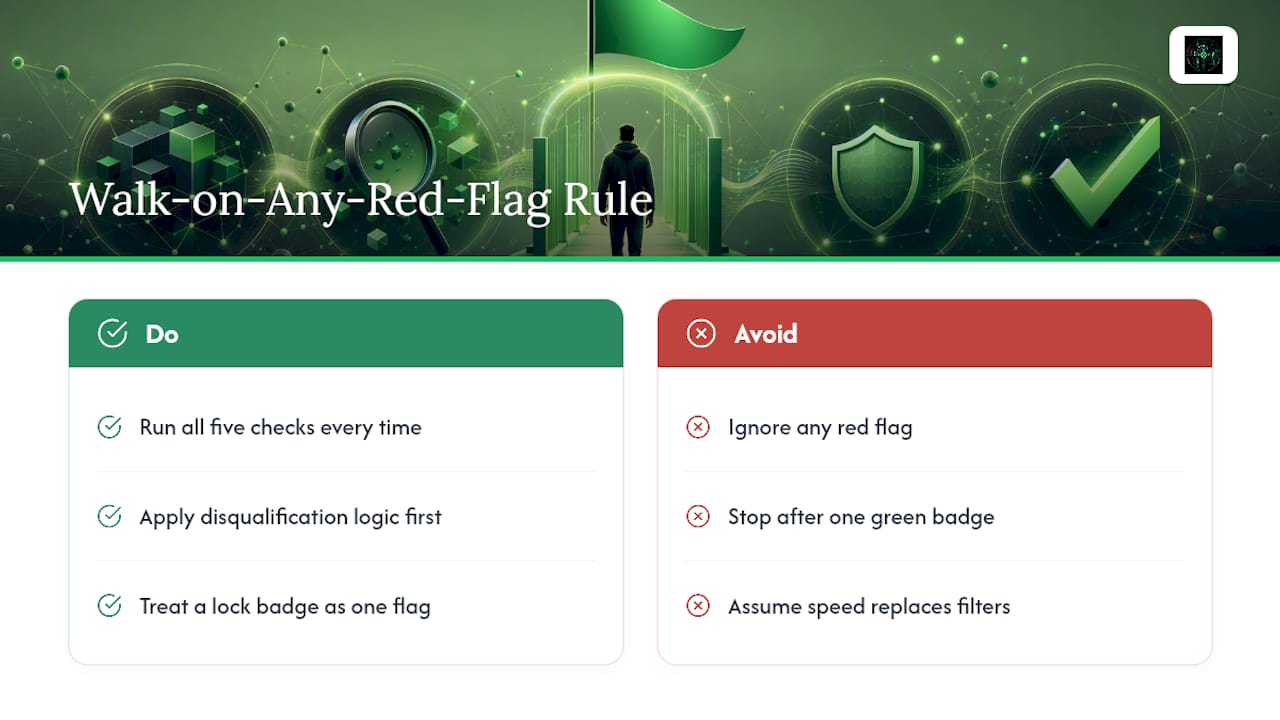
The model reflects this discipline directly. Fast replication only matters if the trader you're copying is running the same disqualification logic before they enter. Speed without a filter just means you lose faster.
The rule isn't complicated: five checks, one red flag, no trade. Complexity is where traders talk themselves into exceptions.
— dang
How Snipethem Fits Into a Faster Vetting Workflow
Running this checklist manually on every token gets exhausting fast, especially if you're trying to snipe launches in real time. Snipethem gives you a faster way to act on it. The platform surfaces top Pump.fun traders' histories, win rates, and live analytics, so you're not vetting a blind wallet, you're seeing a track record before you commit.
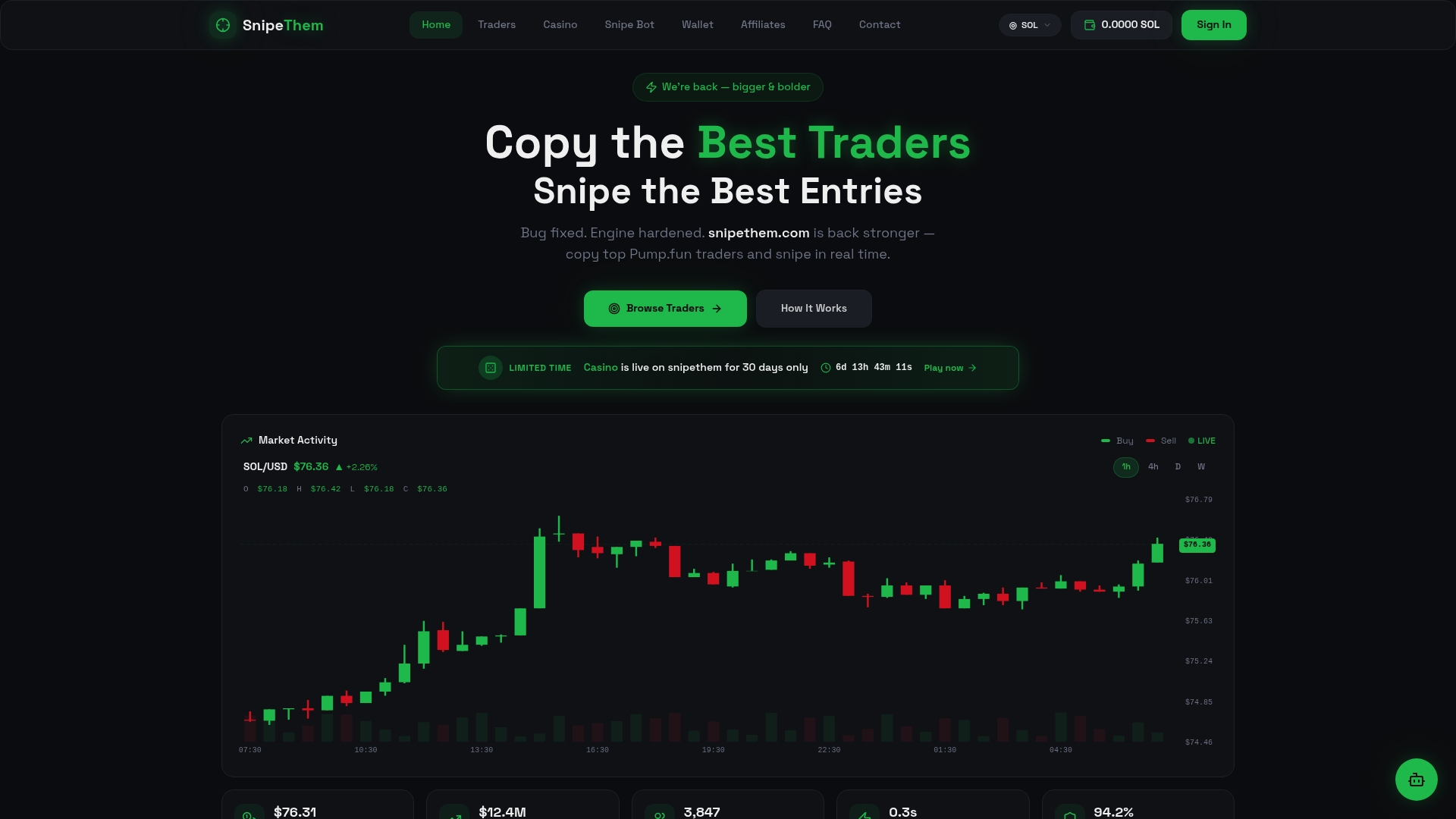
Purchasing 24-hour access to a top Pump.fun trader's history lets you configure a snipe bot to replicate their entries automatically, cutting the manual overhead of running scanner checks on every single launch yourself. That's not a guarantee of profit, and this checklist still applies to whatever the trader you're copying is buying, but it does mean you're leveraging someone else's speed and pattern recognition instead of starting from zero on every token. If you want to see how the trader rankings, live market analytics, and bot configuration work together, the Snipethem platform walks through setup in a few minutes. Start with a single 24-hour access purchase and watch how the replication maps to your own risk rules before scaling up.
Sources
Bookmark SolFoundry's rug pull guide for the five-check breakdown, and its safety scoring guide for scanner interpretation. Use SafuScan's checklist for graduation and LP-burn context, and SolBundler's analysis guide for bubble maps and dev-wallet checks. For social-scam patterns, see this Telegram scam breakdown.
- How to Check if a Solana Token Is Safe (2026) | SolFoundry Blog
- How to Spot a Pump.fun Rug: 7-Point Token Checklist
- How to Analyze a Pump.fun Token Before Buying (2026)